

Law firms live and die by new case enquiries, and most of those begin with a search. People who have been hurt, arrested or served with papers search Google, pick from the first few results and call. This guide to SEO for lawyers explains how law firm SEO works and how to turn search visibility into signed cases.
Why SEO Matters for Law Firms
Legal searches show strong intent. Someone typing “car accident lawyer near me” is not browsing, they need help now. Ranking at the top, especially in the map results, puts your firm in front of people at the exact moment they are ready to hire. Because trust is everything in law, strong visibility and good reviews also signal credibility.
Start With Practice Area and Location Pages
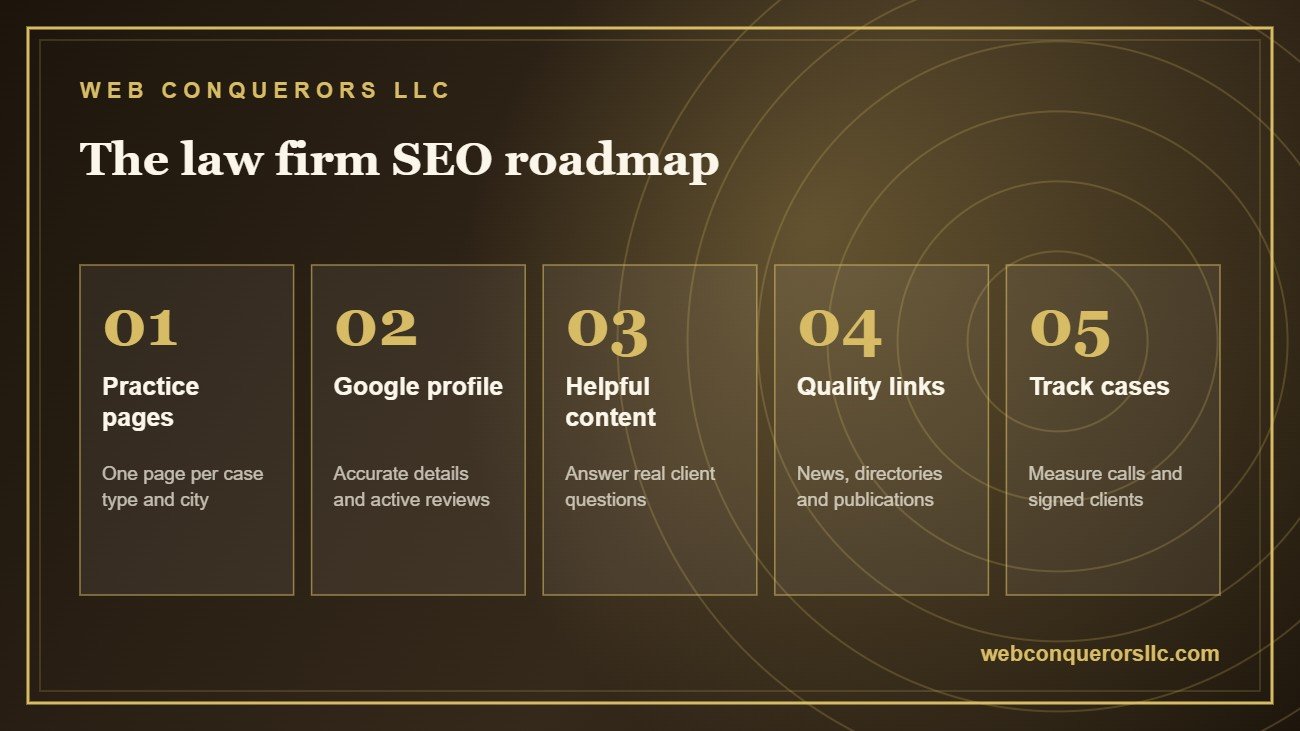
Create a dedicated page for each practice area and each city you serve, rather than one general “services” page. A page on “personal injury lawyer in Austin” can rank for that search, while a vague page cannot. Each page should explain the case type, your process, results where permitted, common questions and a clear way to call.
- One page per practice area, such as injury, family law, criminal defense or immigration
- Location pages for each city or county you actively serve
- Unique, helpful content rather than copied templates
- Clear calls to action, a click-to-call number and a simple contact form
Local SEO and Google Business Profile
Most legal searches are local, so your Google Business Profile matters enormously. Keep your name, address and phone number identical everywhere, choose accurate categories, add photos and respond to every review. Our full local SEO guide walks through ranking in the map pack step by step.
Build Authority With Helpful Content
Potential clients have questions. Answer them. Write guides such as “What to do after a car accident,” “How long does a divorce take?” or “What are my rights if I am arrested?” Helpful content earns links and shows expertise. Google expects experience and trustworthiness, especially for legal topics, so have attorneys review everything and show author credentials. Google’s own SEO starter guide is a useful reference for your team.
Earn Quality Backlinks
Links from respected sites tell Google your firm is trustworthy. Good sources include local news, bar associations, legal directories, community sponsorships and guest articles. Avoid cheap link packages, which can do real damage. A well-planned press release and publications strategy is a safe way to earn credible mentions.
Technical Basics Lawyers Cannot Skip
- Mobile-friendly design: many legal searches happen on phones
- Fast loading: slow sites lose urgent visitors
- Secure HTTPS and clear privacy information
- Schema markup for your firm, attorneys and reviews
- Accessibility: text and buttons everyone can use
SEO and Paid Ads Work Best Together
Legal clicks are some of the most expensive in advertising, which is why organic traffic is so valuable. Many firms combine SEO with targeted ads for faster results. We saw this in action when we helped a firm in our case study on generating high-value injury leads through Meta Ads. Read our guide to Google Ads vs Meta Ads to see which suits your firm.
Follow the Rules
Legal marketing is regulated. Advertising rules vary by state, and the American Bar Association provides resources on professional conduct. Always check testimonials, claims about results and the use of terms such as “specialist” against your local bar rules.
Measure What Matters
Track phone calls, form submissions and, most importantly, signed cases, not just rankings. Call tracking and a simple CRM show which pages and campaigns actually bring clients. Our search engine optimization service reports on leads, not only keywords.
Conclusion
SEO for lawyers is a long-term investment, but it builds a dependable source of cases that does not vanish when ad budgets stop. Focus on practice area pages, local visibility, trustworthy content and clean technical foundations, and measure results by clients won.
Ready to attract more of the right cases? Contact Web Conquerors LLC for a free review of your firm’s website and search visibility.