

Choosing a platform is one of the biggest decisions in any website project, and the wrong choice is expensive to undo. This guide compares WordPress vs Shopify North Carolina businesses most often consider, and adds headless options for companies with bigger plans. There is no single winner, so we focus on matching the platform to your goals, team and budget.
WordPress vs Shopify North Carolina: The Core Differences
WordPress
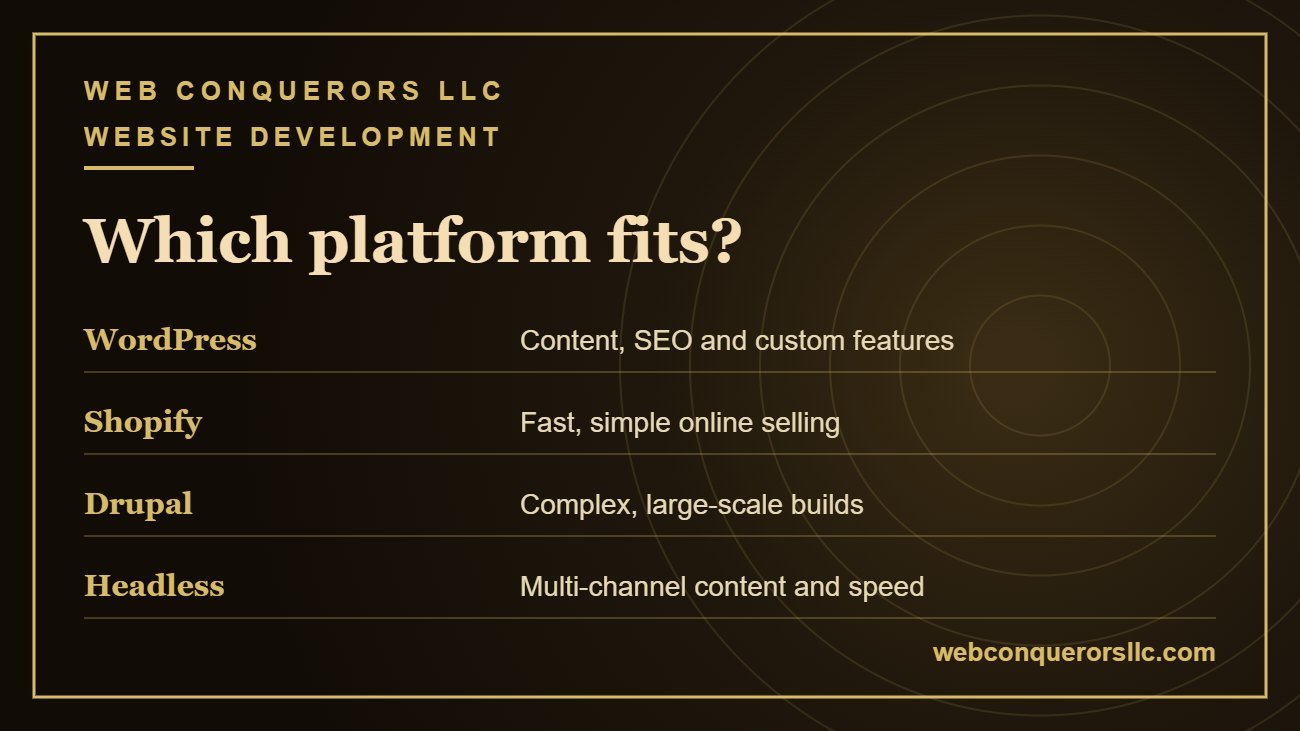
A flexible content platform that powers everything from blogs to large business sites. It offers deep control over content, SEO and design, and a large plugin library. It needs regular updates and good hosting.
Shopify
A hosted platform built for selling online. Hosting, security and checkout are handled for you, which makes it quick to launch. You work within its framework and often pay for apps and transaction features.
Our website cost guide compares typical budget factors.
Both platforms can rank well in search. What matters is how well the site is built, structured and maintained, not the logo behind it.
Think about who will manage the site day to day, since the best platform is the one your team will actually use.
When WordPress Is the Better Choice
- Content, services and lead generation matter more than selling products
- You want full control over SEO, design and structure
- You need custom features such as quotes, memberships or portals
- You plan to publish blog content regularly
With the right CMS customization (WordPress, Shopify, Drupal), each platform can be shaped to your needs, and Drupal suits complex, large-scale projects. Our website design and development team builds on all three.
WordPress also makes it easy to own your content and move hosting later, which some businesses value highly.
When Shopify Is the Better Choice
Shopify suits businesses where selling products is the main goal, especially with a growing catalogue, many orders and a small team. Payments, shipping and inventory tools are built in. For stores that need more tailored experiences, specialist ecommerce website design services can adapt themes, product pages and checkout flows without leaving the platform.
Check transaction costs, app subscriptions and theme limitations before you commit, so the true monthly cost is clear.
Shopify’s simplicity is a real advantage for owners who want to spend time selling, not managing servers and updates.
Headless CMS: Is It Worth It?
A headless setup separates your content from the website layer, so one content hub can feed a site, an app and other channels. Skilled headless CMS development delivers speed and flexibility, but it costs more to build and needs developers to maintain. Search engines can handle modern JavaScript sites, but you must follow rendering best practice, which Google describes in its JavaScript SEO basics. Most small businesses do not need headless, but multi-channel brands may.
Ask a developer for an honest estimate of long-term maintenance before choosing a headless build.
Platform Choices in Charlotte, Raleigh, Greensboro and Durham
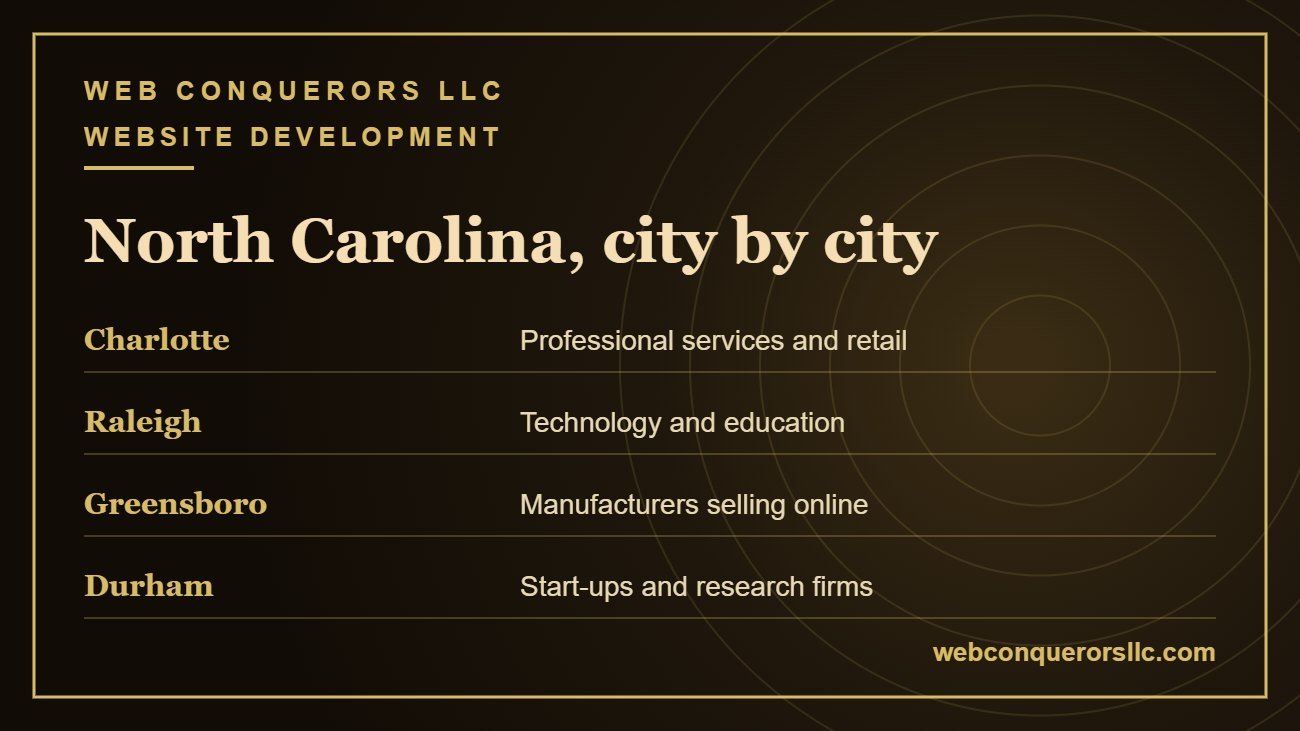
Local business types shape the decision. Companies weighing WordPress vs Shopify Charlotte often include professional services and retailers that need both strong content and sales. For WordPress vs Shopify Raleigh, technology and education businesses tend to value flexibility and integrations. WordPress vs Shopify Greensboro decisions frequently centre on manufacturers and distributors selling directly online, while WordPress vs Shopify Durham often involves start-ups and health and research firms that need to grow quickly. See where we work on our United States locations page.
Whichever you choose, plan migration, redirects and SEO before launch, so rankings do not drop.
Write down your top three goals before you compare platforms, then score each option against them, so the decision rests on facts and not on habit.
Frequently Asked Questions
Is WordPress or Shopify better for small businesses?
It depends on your goals. WordPress suits content-led and lead-generation sites, while Shopify suits businesses focused mainly on selling products online.
Can I move from one platform to another later?
Yes, but migrations take planning. Map every URL, set up redirects and test before launch to protect your search rankings.
Do I need a headless CMS?
Most small businesses do not. Headless suits brands that publish the same content across several channels and have developers to maintain it.
Conclusion
The best platform is the one that fits your goals, your team and your growth plans. Choose WordPress for content and control, Shopify for fast, simple selling and headless for complex, multi-channel needs. Weigh the real running costs, and the question of WordPress vs Shopify North Carolina owners ask will become much easier to answer.
Need help deciding? Contact Web Conquerors LLC for a free platform review and a live consultation.