

An accessible website is easier for everyone to use, including customers with visual, hearing, motor or cognitive disabilities. It also reduces legal risk. This guide explains ADA website compliance Georgia business owners should understand, the WCAG standard that most people follow and the practical fixes to start with. It is general information, not legal advice, so speak to a qualified attorney about your specific situation.
What ADA Website Compliance Georgia Businesses Should Know
The Americans with Disabilities Act is a civil rights law, and the U.S. Department of Justice has published web accessibility guidance explaining how it applies online. In practice, most businesses aim to meet the Web Content Accessibility Guidelines, known as WCAG, published by the W3C. These guidelines describe how to make content perceivable, operable, understandable and robust.
Following accessibility (ADA/WCAG) compliance best practice protects customers first and reduces risk as a result. It also helps your search performance, since many accessibility improvements overlap with good SEO.
Treat accessibility as part of customer service. People who cannot use your site will simply go to a competitor whose site works for them.
Common Barriers We See on Business Websites
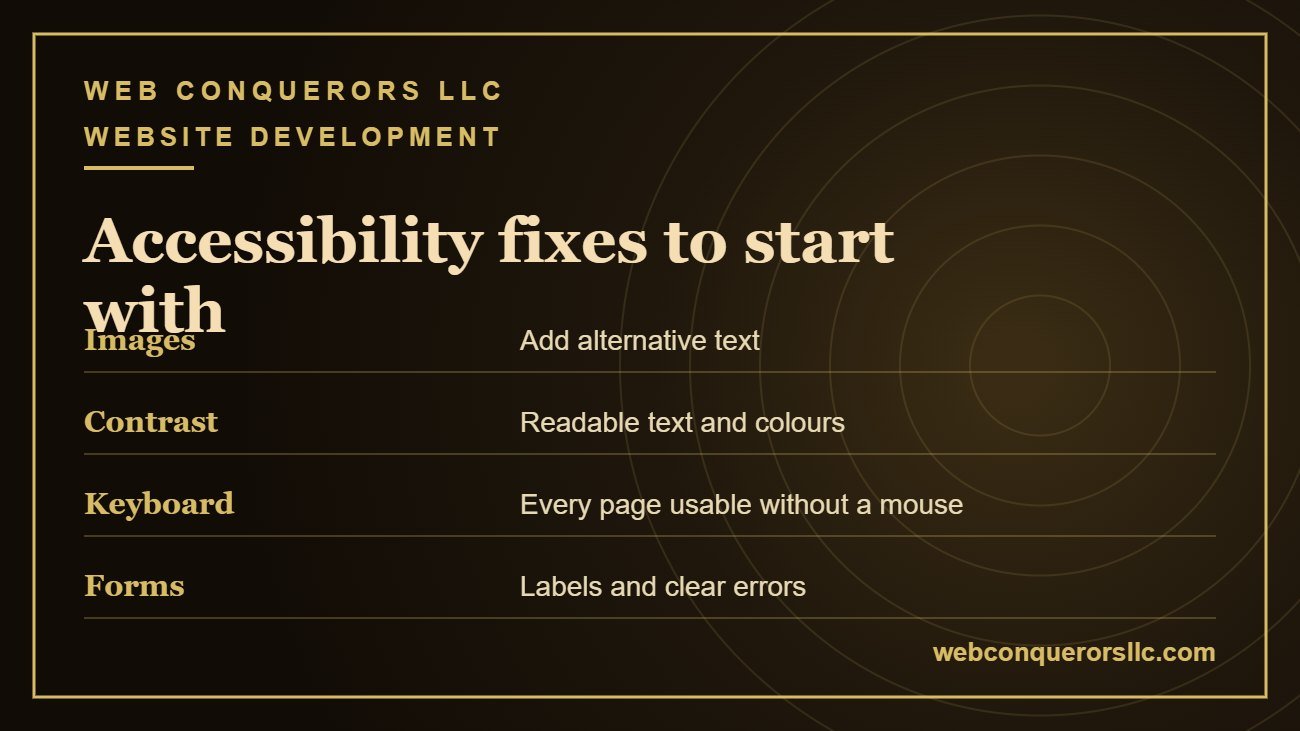
- Images with no alternative text, so screen readers say nothing
- Low contrast between text and background
- Forms with no labels or unclear error messages
- Menus and buttons that cannot be used with a keyboard
- Videos with no captions or transcripts
- Links that only say “click here”
Our guide to redesigning without losing SEO rankings shows how to build accessibility into a rebuild.
Many of these issues are quick to fix once you know where to look.
Try this quick test: put your mouse aside and use only the Tab key to move through your homepage. If you get stuck, so do keyboard users.
A Practical Compliance Checklist
- Run an automated scan to find obvious problems, then test by hand
- Add clear alternative text to meaningful images
- Check colour contrast and text size
- Make every page usable with a keyboard alone
- Label every form field and explain errors clearly
- Add captions to video and transcripts to audio
- Publish an accessibility statement and a way to report problems
Automated tools catch only part of the issues, so human testing matters. Our website design and development service builds these checks into every project.
Keep a record of what you tested and fixed, with dates. It shows good-faith effort and makes future audits quicker.
Keep Your Site Accessible Over Time
Accessibility is not a one-off task. New pages, plugins and content can bring problems back. Reliable website maintenance & support includes regular scans, content checks and quick fixes, so issues do not accumulate. If your business uses client logins, booking or quoting tools, custom web portal development should follow accessibility rules from the first design, because retrofitting complex tools later costs more.
Train the people who publish content, so they add alternative text and clear headings every time.
Schedule a full accessibility review at least once a year, and after any redesign.
ADA Compliance in Atlanta, Savannah, Augusta and Athens
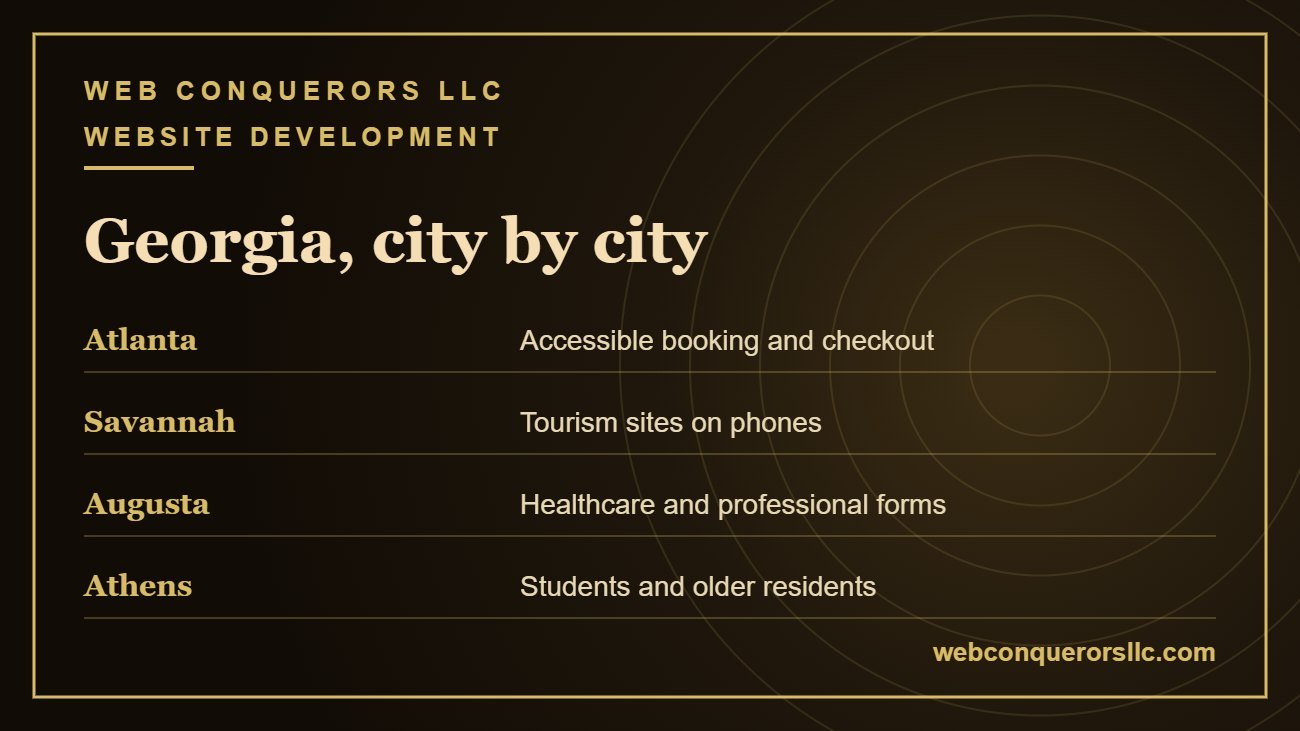
Customers across Georgia use your site in different ways. A business exploring ADA website compliance Atlanta serves a large, diverse audience where accessible booking and checkout matter. ADA website compliance Savannah often involves tourism and hospitality sites with many visitors on phones. Companies handling ADA website compliance Augusta include healthcare and professional services, where clear forms are essential, and ADA website compliance Athens sites often serve students and older residents alike. See our United States locations page for where we work.
Wherever your customers are, test your key forms and checkout paths each quarter with real assistive tools.
Frequently Asked Questions
Does my small business website need to be ADA compliant?
Accessibility is a good practice for every business, and legal expectations are increasing. Speak to a qualified attorney about your obligations, and follow WCAG as a practical standard.
What is WCAG?
WCAG, the Web Content Accessibility Guidelines, is a widely used set of standards for making web content accessible to people with disabilities.
Can an automated tool make my site fully compliant?
No. Automated scans find only some problems. Manual testing, including keyboard and screen-reader checks, is also needed.
Conclusion
Accessibility makes your website usable for more people and lowers risk. Scan, fix the common barriers, test by hand and maintain the result over time. Treat ADA website compliance Georgia work as part of good service, not a one-off chore, and your site will serve every customer better.
Not sure where your site stands? Contact Web Conquerors LLC for a free accessibility review and a live consultation.